
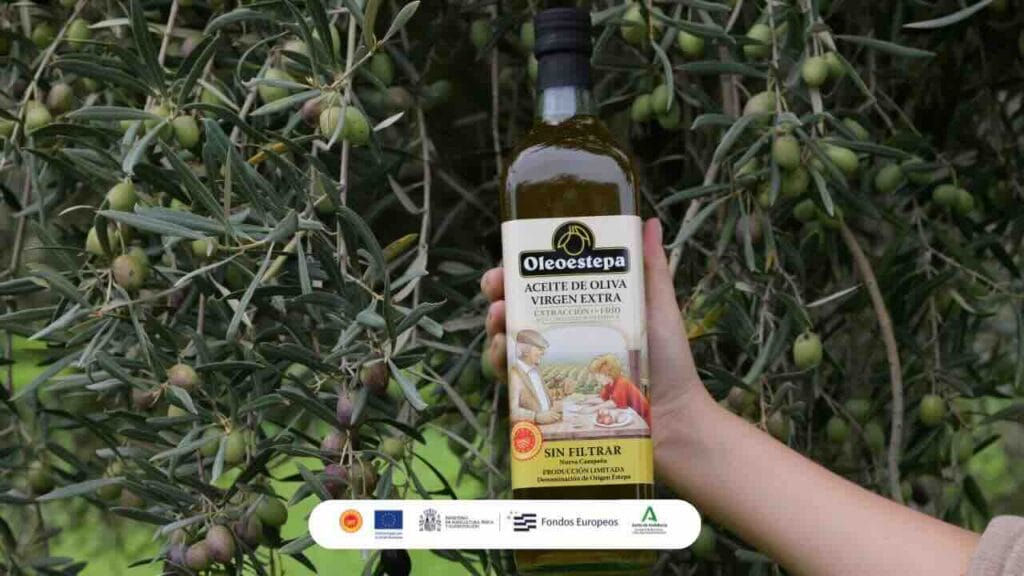
In this article, we address the topic of filtered versus unfiltered extra virgin olive oil (EVOO), as there is a common misconception among consumers. Many people believe that an unfiltered extra virgin olive oil is, by definition, better than a filtered one, and that is a significant mistake.
Is unfiltered EVOO better than filtered?
More and more people are consuming extra virgin olive oil, the highest quality category, and consequently, it is a type of oil that is gaining increasing interest among consumers. Despite our country (Spain) being the world’s largest producer of high-quality EVOO, Spanish consumers are unaware of many factors surrounding EVOO, such as the existing varieties, the difference compared to other oils, or aspects that may appear on the labeling, such as “unfiltered oil.”
It is true that, for some consumers, an unfiltered extra virgin may be more appealing aesthetically than a filtered one due to its color and density or cloudiness. However, these aspects have no relation to quality whatsoever, meaning the statement that “unfiltered oil is better than filtered oil” is completely wrong.
Filtering: an optional step after extra virgin olive oil production
Once extra virgin olive oil has been produced, filtering is optional, not mandatory. The filtering process can be carried out in different ways and has one clear objective:
- To remove the small amounts of solid microparticles from the olive (impurities) and moisture that may remain in the oil after the entire process, resulting in an oil with a brighter and cleaner appearance.
Ultimately, filtering provides the oil with an impeccable commercial presentation and extends its shelf life while maintaining irreproachable organoleptic properties.
Reasons why purchasing filtered oil is more recommended:
- Durability: Through filtering, extra virgin olive oil maintains its positive attributes for a longer time, as the impurities present in unfiltered EVOO can cause fermentation that accelerates the deterioration of the product’s quality.
- Flavor: Although unfiltered extra virgins are associated with more intense flavors, generally, the type of olive, the time of harvest, and a correct production process are what determine the intensity of the aroma and flavor of the EVOO, not the fact that it is filtered or unfiltered.
- 100% Extra Virgin Olive Oil: In a filtered extra virgin, 100% of what the container holds is just that: extra virgin olive oil. In an unfiltered extra virgin olive oil, in addition to the oil, there are residual impurities from the olive and some moisture.
- Tasting (Organoleptics): Unfiltered extra virgin is more prone to the rapid appearance of organoleptic defects, such as “borras” (a characteristic sensation of olive oil that has been recovered from the sides of decanting tanks and oil mills and is in contact with its sediment). Furthermore, if not filtered, the oil can give a “dirty” sensation in the mouth. Therefore, organoleptically, filtered oil presents advantages over unfiltered oils.
- Appearance: Filtered oils have a clean and bright appearance. Conversely, unfiltered extra virgin olive oils, being denser, have a somewhat cloudy appearance. But this is solely an aesthetic matter that, in no way, relates to the quality of the oil.
Does this mean unfiltered extra virgin olive oil is not recommended?
Absolutely not. In fact, as the Estepa Designation of Origin, we certify this type of oil.
An unfiltered extra virgin olive oil can be an excellent oil. The quality of the fruit, the rigor of the production process, and its preservation will be what make for an extraordinary unfiltered extra virgin olive oil.
However, it should always be kept in mind that an unfiltered extra virgin olive oil loses its properties sooner than a properly filtered extra virgin olive oil, so it is even more important to respect the product’s storage recommendations.
In summary, filtering successfully removes residual impurities and moisture without the oil losing any of its physicochemical or organoleptic characteristics, and thus, the extra virgin olive oil that undergoes this process is much more stable and remains in good condition for longer.